
The KMA Friction Reduction Model©
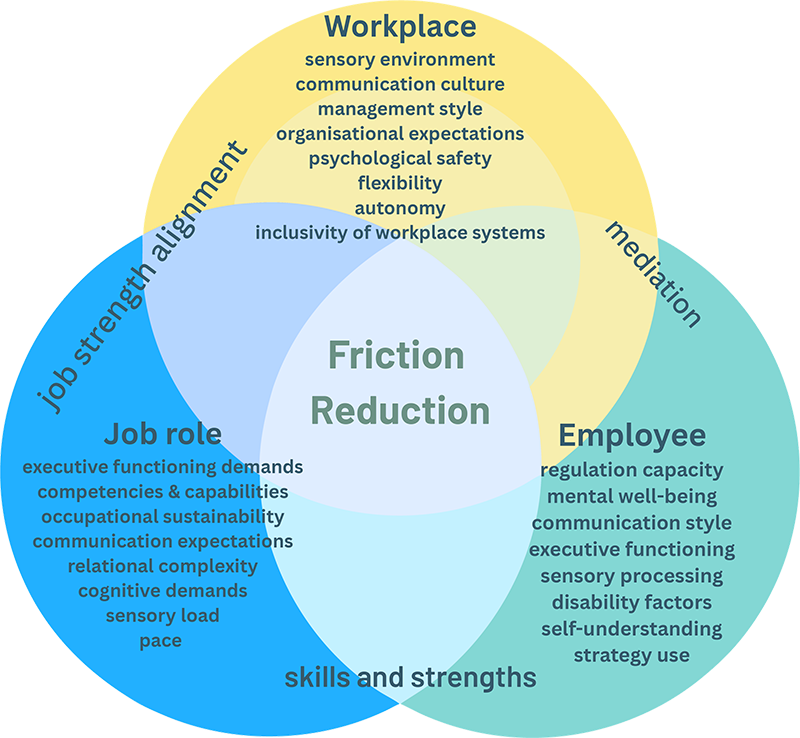
About the KMA Friction Reduction Model©
The KMA Friction Reduction Model© reflects our commitment to supporting sustainable occupational function, whilst reducing organisational and relational friction, within workplace environments. It is grounded in strengths-based and systems-oriented principles. We recognise that for neurodiverse employees, including those with Autism Spectrum Disorders, ADHD, and related conditions, workplace difficulties can arise from a misalignment between the individual, the occupational demands, and organisational systems.
Within the KMA Friction Reduction Model©, ‘friction’ refers to the cumulative mismatch between an individual’s neurocognitive profile and the demands, expectations, systems, and environments, within which they are required to function.


